
Unexpected oven failures during meal preparation halt kitchen operations across Houston households. Our local repair team dispatches certified field technicians equipped with calibrated digital multimeters, non-contact amp clamps, high-temperature wire connectors, and direct-fit heating components straight to your door. We isolate open heating element circuits, degraded silicon carbide igniters, blown thermal cut-offs, and shorted relay boards to restore complete baking and broiling functionality without trial-and-error parts swapping.
An oven that illuminates and tumbles through timer functions without producing cabinet heat indicates a total break along the high-voltage heating loop or gas ignition line. In electric models, 240V dual-element circuits drop output when a nickel-chrome element wire burns through or when a high-limit thermal fuse trips open. In gas units, a weak igniter may glow visually but fail to draw the minimum 3.2 to 3.6 amps required to trigger the bi-metal safety valve.
Our Houston technicians perform schematic-led diagnostics to pinpoint the precise electrical or mechanical point of failure. We measure line voltage, check sensor resistance curves, test thermal cut-off fuses, and inspect heating elements under live load. If another kitchen appliance develops fluid line or drainage failures, our Dishwasher Drain Pump Repair in Conroe, TX service follows the exact same technical diagnostic approach to isolate root-cause issues and restore long-term household reliability.
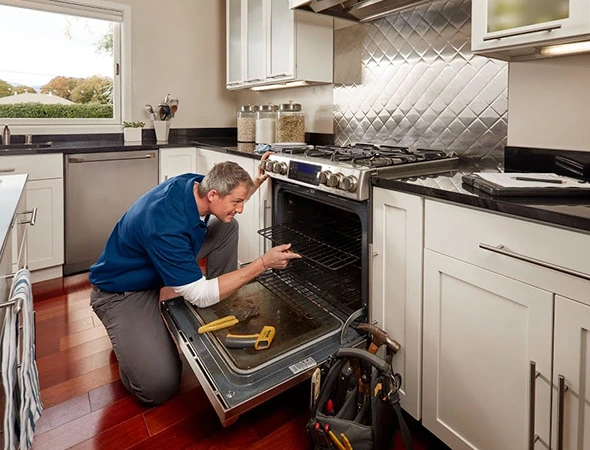
Urgent repair solutions designed to restore oven functionality quickly, with a focus on accurate diagnostics and immediate action.
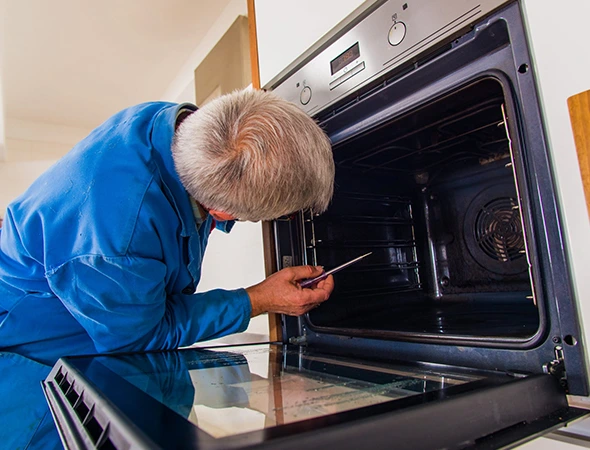
People call us when they’re tired of guesswork, repeat breakdowns, and slow service that drags problems longer than they should.
Clear Problem Finding
We check the appliance carefully and explain what failed in simple words so you understand the issue before any repair begins.
Fair, Upfront Costing
Pricing stays clear from the start, so you don’t face surprise charges after the work is already done.
Experienced Hands
Years of real repair work help us fix issues faster and avoid unnecessary trial-and-error on your appliances.
Fast Response Visits
We aim for quick scheduling so you don’t stay stuck with a broken appliance for days.
Simple Booking
You reach out, explain the issue briefly, and we set a visit time that fits your day without hassle.
Careful Inspection
We arrive, test the oven properly, and trace the exact fault instead of guessing or rushing into repairs.
Focused Repair
Once you approve, we fix the real issue using the right parts and methods that match your oven type.
Final Testing
Before leaving, we run full checks so you can cook right away without worrying about repeat issues.
When an oven fails to respond to keypad commands or power up entirely, the issue stems from an interrupted main power supply or tripped safety interlock. On electric units, loss of one 120V leg on a 240V NEMA circuit leaves control displays powered while preventing heating components from engaging. On both gas and electric models, a shortened noise filter, blown internal transformer fuse, or open door latch microswitch will prevent system boot-up.
Our field specialists test incoming terminal block voltage and check continuity down the main power harness. We isolate failed thermal cut-offs, replace shorted control transformers, and repair loose wiring pin connections. Restoring continuous line voltage ensures your oven boots up instantly, accepts user commands, and initiates heating cycles without sudden shutdowns.
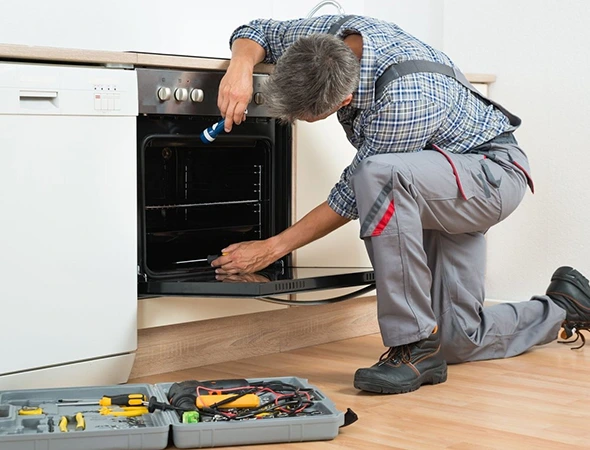
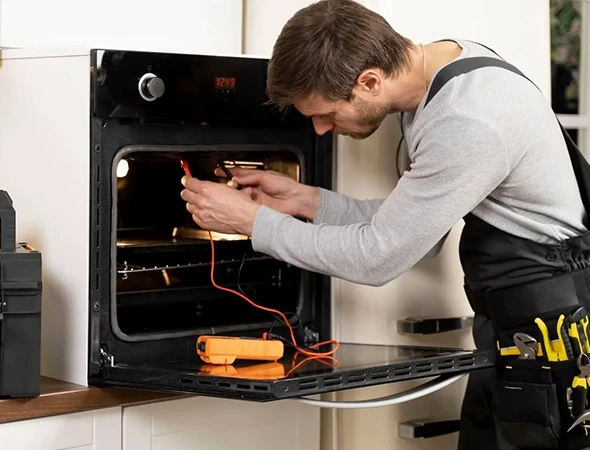
Gas and electric ovens rely on fundamentally different energy transfer mechanics, requiring distinct diagnostic procedures during emergency breakdowns. Electric ovens utilize dual high-wattage bake and broil element loops regulated by solid-state control board relays. Gas ovens utilize an electronic spark module or silicon carbide igniter working in series with a bi-metal gas safety valve to initiate combustion.
Safety remains our primary protocol during gas system servicing; we perform gas leak pressure drop checks and verify manual shut-off valve integrity before initiating testing. We repair gas ovens by measuring igniter amperage draw, clearing clogged burner port orifices, and verifying safety valve-seat operation to eliminate delayed gas ignition or gas odor buildup. For electric ovens, we inspect element sheath integrity, test 240V relay contacts, and replace burnt wire terminals to guarantee uniform heat distribution and safe operation.
Inconsistent baking times, burnt food edges, or undercooked centers point directly to a degraded ignition system or calibrated sensor drift. In gas ovens, an aging igniter may take up to two minutes to draw enough current to open the safety valve, causing wide temperature swings during bake cycles. In electric ovens, an RTD (Resistance Temperature Detector) sensor probe that has drifted out of tolerance feeds incorrect resistance data to the control board, causing premature heat shutoff.
We test RTD temperature sensors against factory resistance specifications (measuring approximately 1080 ohms at 70°F room temperature). We replace weak igniters drawing below operational amperage thresholds, install calibrated sensor probes, and replace cracked silicone door gaskets to seal in heat. If another essential kitchen appliance starts losing performance, our Refrigerator Repair Services use the same diagnostic-first approach to restore dependable cooling and prevent recurring problems.
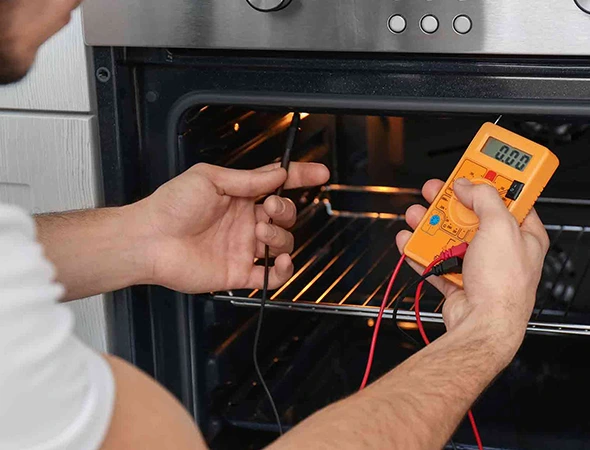

Flickering display codes, unresponsive touchpads, or random temperature fluctuations signal micro-relay fatigue or logic corruption on the main electronic control board. Houston power spikes and ambient kitchen heat can cause solder joints on the control module to fracture or cause relay contacts to pit and weld shut, trapping the oven in a constant-on or complete lockout state.
Our diagnostics team inspects internal control boards for thermal damage, shorted capacitors, and open circuit traces. We verify DC output voltages from the transformer, clear active fault codes, and replace damaged relay modules or entire main control assemblies. Restoring proper logic board operation re-establishes precise user input controls and stable thermal management.
Why does my oven turn on but not heat up?
An oven powers on but stays cold when an electric bake element coil snaps, a high-limit thermal fuse trips open, or a gas igniter fails to draw enough current (3.2 to 3.6 amps) to open the safety valve.
Why does my oven stop working suddenly?
Sudden oven shut-offs mid-cycle are caused by an overheating main control board tripping its internal safety switch, an open door latch microswitch, or a blown inline thermal fuse.
Do you fix gas oven ignition problems?
Yes, we test igniter amperage draw, clear clogged gas burner ports, replace weak silicon carbide igniters, and repair dual-gas safety valves across all gas oven models in Houston.
How fast can you come for repairs in Houston?
We provide direct field dispatch across Houston, TX for emergency oven failures, arriving with fully stocked service vehicles to perform same-day diagnostics and component replacements.
Will I need to replace my whole oven?
Most oven breakdowns are caused by individual, easily replaceable components like igniters, thermal fuses, elements, or sensor probes, which can be repaired on-site at a fraction of full replacement cost.
When your oven stops working, fast technical response prevents extended kitchen downtime. Our team delivers immediate diagnostic testing and precise component replacement to restore safe heating performance across all gas and electric units in Houston, TX.
Our Houston repair specialists bring 25 years of hands-on experience in residential appliance servicing. From gas igniter failures and element burnouts to control board lockouts and thermal fuse trips, every job is executed with technical precision to guarantee long-term performance, safety, and reliability for your home.